How to Stop Grubs in Your Lawn

6.2K
309
135
2025-10-27
How to Stop Grubs in Your Lawn

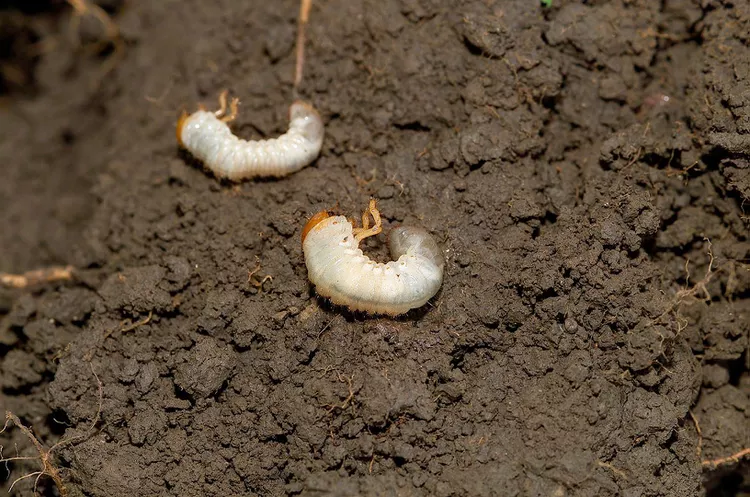
If in July or August, your grass turns brown and is easy to pull up, or you notice a lot of critters, such as skunks or raccoons, tearing up your lawn, it may be infested with grubs. White grubs are the larvae of Japanese beetles, June beetles, or masked chafer beetles. They cause damage to lawns by feeding on the roots of grass.

To get rid of white grubs, it is key to identify which grubs are in your lawn and understand their life cycle because successfully treating grubs is all about timing.

Identifying the Pest

Depending on the species, grubs may have a one-year to three-year life cycle. 

Annual white grubs are the larvae of the Japanese beetle, masked chafer beetle, and others. They begin their life cycle in mid- to late summer, grow quickly, and do most of their feeding in late summer. 

Multi-annual white grubs are the larvae of several species of June beetles that take two to three years to complete their life cycle. They emerge in May or June, feed during the summer and fall, and overwinter deep in the soil.

When to Control Grubs

Controls are most effective on immature grubs. For most species and locations that means July or August is the prime time to treat the grubs with an insecticide. However, because grub populations vary from year to year, you may be able to save the cost of treatment if you first sample your lawn to estimate how many grubs are present: 

  • Dig up several pieces of sod about a foot square.
  • If you find five or fewer grubs per square foot, you need not apply grub control. The lawn will withstand the amount of feeding these few grubs do.
  • If 10 or more grubs are present, treat your lawn.
  • If the average count is between five and 10, whether or not to control depends on the health of your lawn, your tolerance for damage to the lawn, and the presence of natural controls.

A healthy, well-maintained lawn is less prone to grub damage than a stressed lawn. Select a suitable type of turfgrass for your climate, feed the lawn without overfertilizing it, and follow other tips for proper lawn care. Check out the seasonal lawn-care schedules for the Northeast, Midwest, Pacific Northwest, and Southern California.

Natural Grub Control

Milky Spore

Milky spore (Paenibacillus popilliae) is a natural bacterium that can effectively control Japanese beetle grubs by causing a chronic infection in Japanese beetle grubs and diminishing their reproduction numbers over time. The downside is that milky spore usually takes several years to take effect. Furthermore, it requires some grubs to live on, so don't use it together with chemical controls. Milky spore comes in powder form and it is only effective on Japanese beetle grubs.

Nematodes

Beneficial nematodes are microscopic worms that live in the soil. They seek out grubs, and after entering their bodies, release bacteria that act as killers. The two major types of insect parasitic nematodes are Steinernema spp. and Heterorhabditis spp. The nematodes are applied as a live product, so make certain that they are alive, that they've been handled carefully, and that their shelf life has not expired. These two types of nematodes are effective on all types of grubs.

Weather and Irrigation

Grub populations are usually the highest when soil conditions are consistently moist. In dry years, or if you withhold irrigation water during hot summer months, many grubs will not survive. This strategy may work well for bluegrass lawns, which recover well from summer dormancy.

Chemical Grub Control

Because grub populations vary considerably from year to year, preventive chemical controls are seldom justified. But if your lawn is consistently attacked by grubs, you might want to consider applying a chemical insecticide. Chemicals labeled for curative control are carbaryl, halofenozide, and imidacloprid. You must apply these chemical controls at the correct time when the grubs are small and actively feeding near the soil surface, usually from early July until mid-August.

Water in the chemical controls how they penetrate the soil and act on the grubs. Watering the lawn after chemical application not only moves the product down into the thatch layer, it also stimulates the grubs to move upward in the soil, closer to the chemical.

Most insecticides not only kill white grubs but they are also highly toxic to bees and other pollinating insects. Always use chemical insecticides as the last resort, weigh how long they are effective against grubs vs. their potential risks, and carefully follow the label instructions before applying the product.

Frequently Asked Questions

  • What do white grubs turn into?

    Depending on the species, they turn into Japanese beetles, masked chafer beetles, June beetles, scarab beetles, or another type of beetle.

  • Are white grubs harmful?

    White grubs, which live in the soil, can wreak havoc of a lawn but they don't sting or bite humans or pets nor do they transmit diseases.

Related Article

Follow This Summer Garden Checklist to Keep Plants Thriving All Season
8.9K
533
213

Follow This Summer Garden Checklist to Keep Plants Thriving All Season

These guidelines will help you stay on top of summer gardening tasks and maintenance, keeping your plants colorful and thriving throughout the season.
12 Plants You Should Never Cut Back in Fall
20.6K
1K
102

12 Plants You Should Never Cut Back in Fall

These common garden shrubs and perennials should not be cut back in fall if you want healthier plants and more abundant flowers.
How to Test Your Garden Soil’s pH Level in 4 Simple Steps
22.4K
447
160

How to Test Your Garden Soil’s pH Level in 4 Simple Steps

Check your soil's acidity or alkalinity with an inexpensive kit, then use this info to decide which additives you need to grow healthier plants.
How to Sharpen Your Lawn Mower Blade for a Cleaner Cut
17.4K
872
113

How to Sharpen Your Lawn Mower Blade for a Cleaner Cut

Follow this step-by-step guide on how to sharpen your lawnmower blade for grass that will look tidier and stay healthier all season long.
How to Improve Soil in an Established Plant Bed
5.9K
530
111

How to Improve Soil in an Established Plant Bed

How to amend soil around plants without having to dig them up. Follow our easy tips.
Can You Mow Wet Grass? The Answer, Plus 7 Mowing Tips
39.7K
2.8K
444

Can You Mow Wet Grass? The Answer, Plus 7 Mowing Tips

Wet grass, whether it’s from morning dew or relentless rain, makes lawn care challenging. Keep your turf in check with our mowing tips.
Ladybug vs. Asian Lady Beetle: How to Tell the Good Bug from the Bad Bug
33.1K
1.3K
330

Ladybug vs. Asian Lady Beetle: How to Tell the Good Bug from the Bad Bug

A ladybug and an Asian lady beetle look similar, but one type helps control unwanted insects in the garden while the other is a pest itself. Here's how to tell these similar-looking bugs apart.
How to Get Rid of Clover Mites and Keep the Pests Away from Your Home
46.8K
3.3K
1.5K

How to Get Rid of Clover Mites and Keep the Pests Away from Your Home

Here's how to identify clover mites, the conditions that attract them, and ways get rid of them.
8 Insect-Repelling Plants that Work Naturally to Send Bugs Packing
25.2K
2K
947

8 Insect-Repelling Plants that Work Naturally to Send Bugs Packing

Improve your time outdoors with a few strongly scented insect-repelling plants, which can send pesky biting bugs, like mosquitoes and flies, packing.
2 Plants that Repel Ticks and Fleas from Your Yard
39.7K
4K
1.8K

2 Plants that Repel Ticks and Fleas from Your Yard

Flea and tick season is inevitable. Use garden plants that repel ticks and fleas to keep blood-sucking pests far away from you and your pets.
What Are the Tiny White Bugs on Your Plants? 4 Common Pests They Could Be
33.6K
671
140

What Are the Tiny White Bugs on Your Plants? 4 Common Pests They Could Be

Tiny white bugs on plants in your home or outdoors can be a big problem. Learn how to identify and get rid of them with this guide.

8 Expert Tips on How to Keep Squirrels Out of Bird Feeders
31.2K
2.5K
923

8 Expert Tips on How to Keep Squirrels Out of Bird Feeders

These tips from experts on how to keep squirrels out of bird feeders ensure a cleaner outdoor space and only birds at your feeder.
8 Tips for Growing Cherry Tomato Plants That Will Thrive All Season
5.2K
364
152

8 Tips for Growing Cherry Tomato Plants That Will Thrive All Season

Find out how to keep your cherry tomato plants producing plenty of ripe, juicy fruit from midsummer until fall.
Is Basil a Perennial That Will Come Back Each Year?
22K
1.8K
316

Is Basil a Perennial That Will Come Back Each Year?

Is basil a perennial or an annual in your area? No matter where you live, these gardening tips will let you enjoy fresh basil year-round.
10 Best Lavender Companion Plants
30.4K
3K
303

10 Best Lavender Companion Plants

Learn how to grow a lower maintenance edible or ornamental garden with these top lavender companion plants.
How to Grow Sweet Potatoes in Containers for a Tasty Harvest
46.9K
4.2K
2.1K

How to Grow Sweet Potatoes in Containers for a Tasty Harvest

This guide covers how to grow sweet potatoes in containers, including must-know tips on choosing containers, planting, care, and harvesting.
9 Tips for Companion Planting Vegetables to Boost Harvests
35.9K
2.5K
451

9 Tips for Companion Planting Vegetables to Boost Harvests

Companion planting is a natural and organic gardening technique that helps repel pests and grow healthier plants. Use these smart tips to start companion planting in your vegetable garden.
This Corner Garden of Shrubs and Trees Will Look Beautiful Year-Round
49.9K
4.5K
988

This Corner Garden of Shrubs and Trees Will Look Beautiful Year-Round

This simple plan, which includes trees and shrubs for the corner of your house or patio, offers privacy and plenty of vertical interest.
This Clay Soil Garden Plan Will Thrive Even in Tough Conditions
26.5K
1.1K
413

This Clay Soil Garden Plan Will Thrive Even in Tough Conditions

The plants in this stunning clay soil garden plan thrive in less than ideal planting conditions.
This Easy-Care Summer Garden Plan Will Shine in a Sunny Spot
28.4K
568
96

This Easy-Care Summer Garden Plan Will Shine in a Sunny Spot

Use this easy-care summer garden plan to enjoy a beautiful season-long floral show with very little work.